

Kick-off: Enhancing Sustainability by Mass Customization for European Consumer Electronics (SMC-EXCEL)
June 1, 2014 at 4:21 pm by Stephan Hankammer
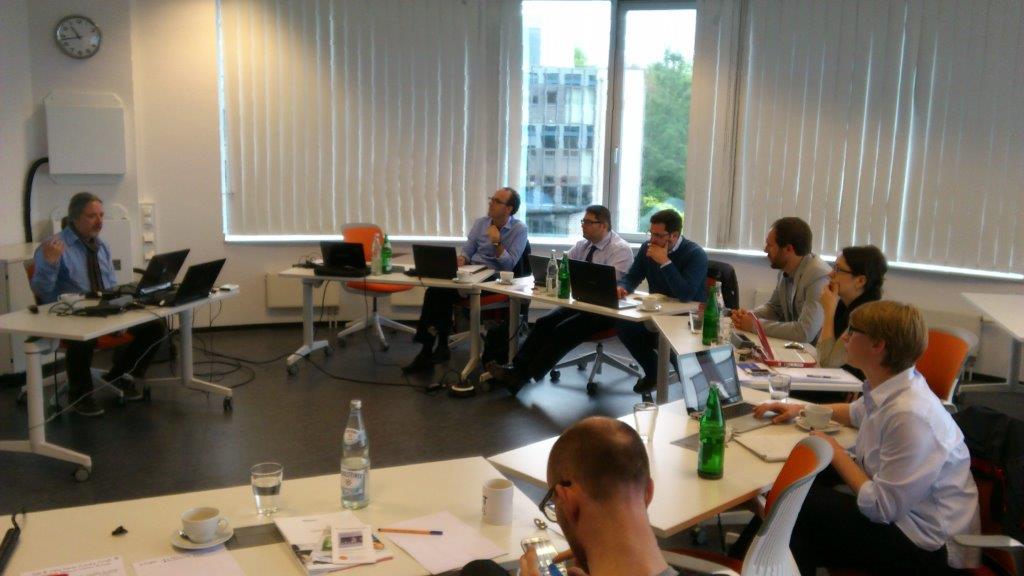
We are happy to announce the successfull kick-off of our exciting new research project focussing on sustainability and mass customization. Our new project team (Technology and Innovation Management Group, RWTH Aachen University, Germany // e-hoch-3 eco efficiency experts, Germany // Vestel Electronics, Turkey // SUPSI, Department of Innovative Technologies, Switzerland // Gavia SA, Switzerland) is looking forward to develop and evaluate a system innovation enhancing the ecological sustainability in consumer electronics (CE), focusing on television sets (TV).
The project will provide guidelines and policy recommendations to enhance the eco-sustainability of TVs by shifting its value chain from the current mass production of products with short technology cycles (“gadgetization”) towards a mass customization (MC) of TV sets meeting individual users’ demands. Even though MC has been regarded by the EC as one of the main value drivers of a sustainable economy, manufacturers of consumer electronics have not yet followed this business paradigm. To overcome this adoption barrier, the project will enable a full system innovation by remodeling the complete value chain of the TV industry towards a sustainable business model driven by MC.
We think that the implementation of mass customization in the European consumer electronics (CE) industry will contribute greatly to the European environmental and social policy and will help to reach the European goals of energy and resource efficiency, reduction and elimination of use of toxic chemicals as well as waste and recycling directives. This project will also help to support the European competitiveness in eco-efficiency and sustainability systems and services and thus contributes to building a European job base in sustainable manufacturing. Especially SMEs that contribute individual and regional solutions will benefit from the project. Beyond these potential impacts, it is the project’s vision to provide benefits for individual customers with regard to research on their needs for hedonistic consumption and a sustainable life-style. It hence is necessary to consider different consumer groups that represent structurally different European countries. The transnational structure of the project consortium allows us to systematical evaluate the proposed system innovation by concept testing in different socio-demographics with various political and economic patterns.